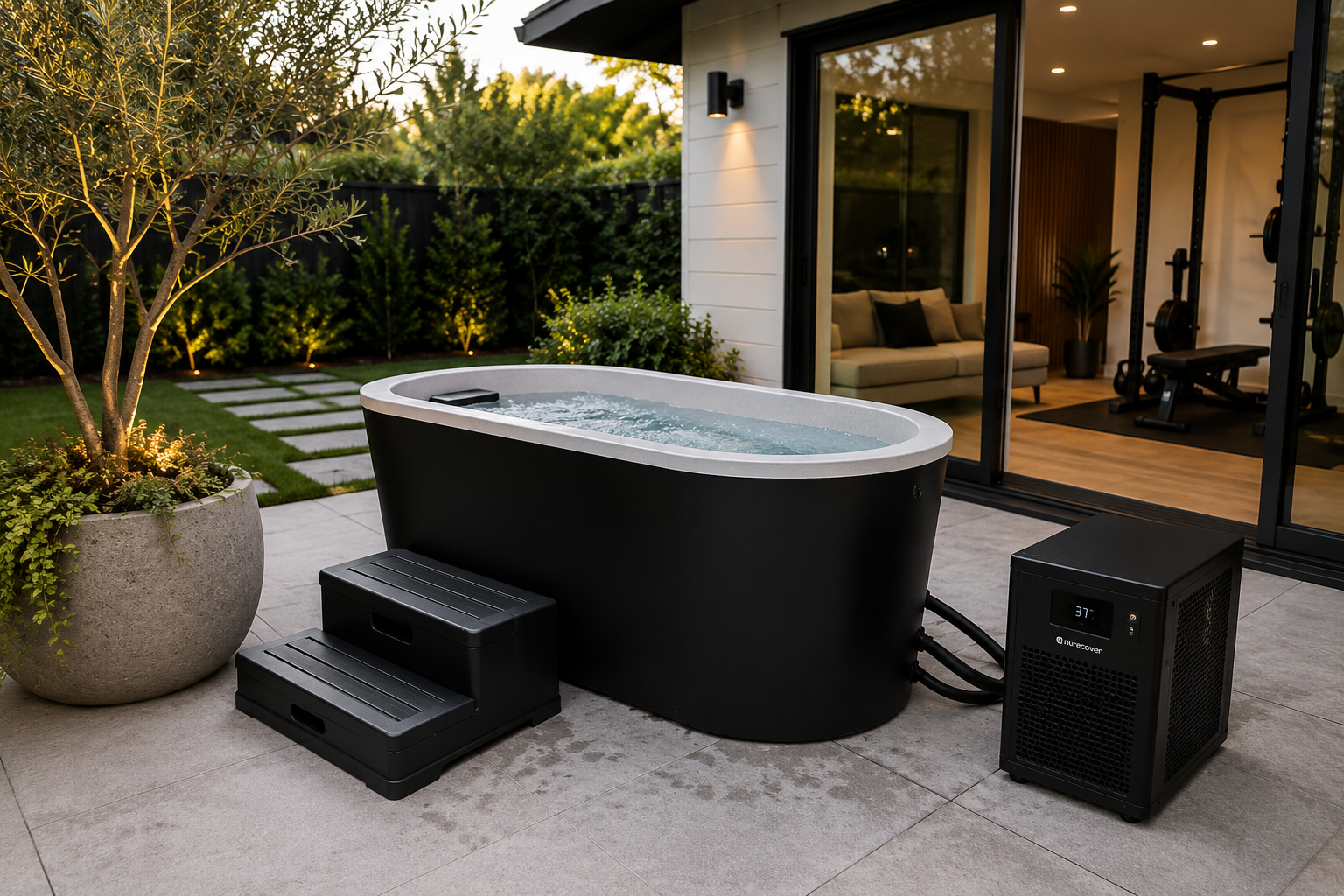
A home cold plunge can be as simple as a well-insulated tub or as complete as a self-cooling system with filtration and sanitation. The right choice depends less on the most dramatic temperature claim and more on how the unit fits your space, climate, routine and tolerance for maintenance.
The short answer: choose the placement first, then compare cooling performance, filtration, cleaning, noise, electrical requirements, delivery access and warranty support. A plunge you can keep clean and use consistently is usually a better purchase than a more complicated system that is difficult to maintain.
Affiliate disclosure: Sorene & Stone may earn a commission from certain links on this site, at no additional cost to you. Affiliate relationships do not determine which products we include.
Start with the system type
| System | Best suited to | Main trade-off |
|---|---|---|
| Ice-filled tub | Occasional use and a lower initial cost | Requires repeated ice purchases, draining and temperature management |
| Portable tub with separate chiller | Flexible home setups and buyers who want active cooling | More hoses and visible equipment; quality varies widely |
| Integrated cold plunge | A permanent, polished wellness space | Higher purchase price and more delivery planning |
| Chest-style or compact plunge | Small footprints and solo use | Entry, seating position and insulation need careful review |
1. Cooling performance
A chiller’s headline rating only tells part of the story. Real performance depends on water volume, insulation, room or outdoor temperature, direct sun and how often the cover is removed. A system that performs well in a mild indoor room may work harder in a hot garage or exposed patio.
- Confirm the recommended water-volume range.
- Look for an insulated tub and a fitted cover.
- Ask what ambient-temperature range the manufacturer supports.
- Check whether cooling performance is measured in realistic residential conditions.
- Confirm whether the system can hold a set temperature between uses.
2. Filtration and sanitation
Cold water still needs regular care. Filtration removes debris, while sanitation helps control what the filter cannot capture. Systems may use replaceable filters, ozone, ultraviolet treatment or a manufacturer-approved water-care routine. No feature makes maintenance disappear.
Before buying, find out how frequently the filter needs attention, how the water is tested, which cleaning products are approved and how often the unit should be drained. Replacement filters and other consumables should be easy to order.
3. Size, depth and entry
External dimensions do not tell you how the plunge feels. Compare interior depth, usable legroom, seating position and the height of the rim. A taller unit may offer deeper immersion but can be more difficult to enter. Steps, a stable handhold and a non-slip surface may matter as much as the tub itself.
- Measure the full footprint, including the chiller and hoses.
- Leave access for cleaning, filter changes and drainage.
- Check the filled weight with the installer or a qualified professional.
- Measure every doorway, gate, hallway and turn on the delivery path.
- Confirm whether the unit arrives assembled, partially assembled or curbside.
4. Indoor or outdoor placement
Indoor placement
Plan for splashing, condensation, drainage and a water-resistant floor. The space should allow ventilation and easy access to the equipment. Confirm the floor’s suitability for the filled weight and use only the electrical arrangement specified by the manufacturer.
Outdoor placement
Shade, weather protection and insulation become more important outside. Confirm that the complete system—not just the tub—is approved for the intended exposure. Direct sun can increase the cooling load, while freezing conditions may require winterization.
5. Noise and everyday usability
A chiller, pump and fan can be audible while running. Ask for an operating-noise specification and consider the location relative to bedrooms, workspaces and neighboring properties. Also look at the details you will handle every week: cover weight, controls, drainage, hose connections and filter access.
6. Electrical and drainage planning
Follow the manufacturer’s exact voltage, amperage, grounding and outlet requirements. Water and electricity require careful planning, so use a qualified electrician when a new or dedicated circuit is needed. Avoid extension cords and power strips unless the manufacturer explicitly permits them.
Decide where drained water will go before installation. A convenient drain, suitable hose route or approved outdoor discharge point can make routine water changes far easier.
7. Warranty, returns and support
Read the warranty by component. The tub, chiller, pump and accessories may have different coverage periods. Check who pays freight for a repair, whether service is available in your area and what happens if the product arrives damaged or cannot pass through the delivery route.
The questions worth asking before purchase
- What water volume and ambient conditions is the chiller designed for?
- How long does initial cooling typically take?
- What filtration and sanitation routine is required?
- How often should filters and water be changed?
- What are the full electrical requirements?
- How loud is the system while cooling?
- Is the complete unit approved for indoor or outdoor use?
- What are the filled weight and delivery dimensions?
- What does the warranty cover for the tub, chiller and pump?
- Are replacement filters, parts and technical support readily available?
A simple decision framework
Choose an ice-filled or simple portable tub when low initial cost matters most and you are comfortable with hands-on temperature management. Choose a chiller-based portable system when flexibility and active cooling are priorities. Choose an integrated plunge when appearance, insulation, filtration and a more permanent installation justify the higher investment.
Whatever the format, prioritize fit, cleaning and support over novelty. The strongest home setup is one that suits the space, stays manageable and can be maintained according to the manufacturer’s instructions.
Continue with our 2026 Home Cold Plunge Buying Guide for a current checklist and partner recommendation, or browse our Cold Plunge guidance.
This article provides general product-selection information and is not medical advice. Cold exposure may not be appropriate for everyone. Follow product instructions and consult a qualified healthcare professional if you have health concerns or medical conditions.
Leave a Reply