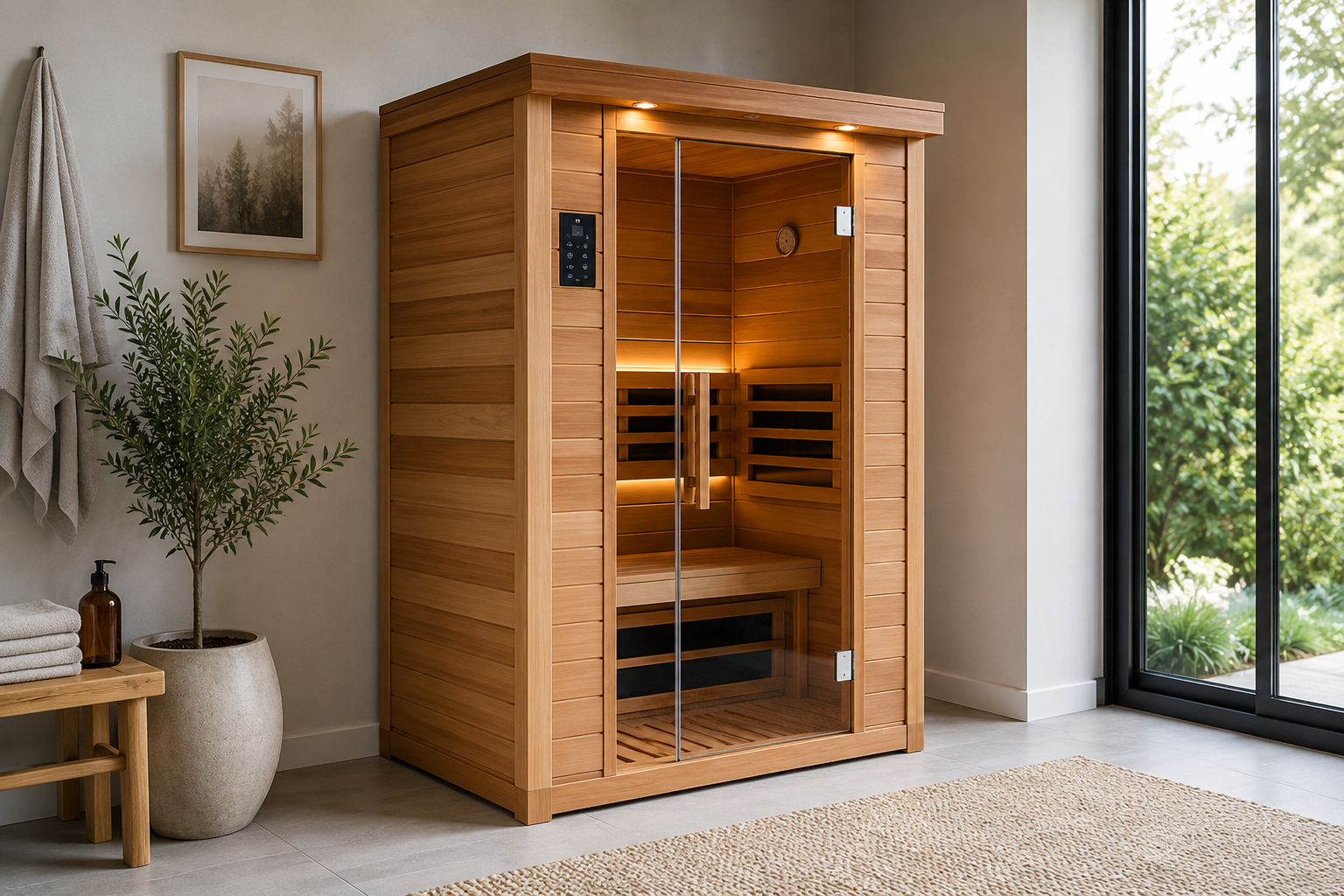
Choosing between cedar and hemlock can change how a home sauna looks, smells, ages, and fits into the rest of the room. Cedar brings warmer color, a distinctive natural aroma, and strong moisture resistance. Hemlock offers a lighter, quieter appearance, a more neutral scent, and is often the more accessible option.
Neither wood is automatically “better.” The right choice depends on the type of sauna, your tolerance for fragrance, the design of the room, your maintenance expectations, and the quality of the construction.
Cedar vs. hemlock sauna: the quick answer
| Choose cedar if you prefer | Choose hemlock if you prefer |
|---|---|
| Warm color and visible natural character | A pale, clean, contemporary look |
| A noticeable wood aroma | Little or no lingering fragrance |
| Strong natural moisture resistance | A typically lower initial price |
| A traditional sauna atmosphere | A neutral material for modern interiors |
Our short verdict: cedar is a strong choice for buyers who value natural character, aroma, and moisture resistance. Hemlock often suits design-conscious infrared-sauna buyers who prefer a light finish, a neutral scent, and a more restrained look.
1. Appearance and design
Cedar
Cedar typically has richer red, honey, and brown tones with more visible grain variation. It creates the warm, enveloping look many people associate with a traditional sauna. In an organic-modern home, cedar can work beautifully when the surrounding room uses stone, plaster, dark metal, or other warm natural materials.
Hemlock
Hemlock is usually lighter and more uniform, ranging from pale blonde to soft tan. Its understated grain makes a compact sauna feel brighter and allows glass, lighting, and surrounding architecture to remain visually prominent. It often integrates easily into minimalist bathrooms, home gyms, and contemporary wellness rooms.
Wood color varies between trees and manufacturers, so compare photographs of the actual model rather than relying only on the species name.
2. Scent and sensitivity
Cedar contains aromatic natural compounds that become more noticeable when the sauna heats. Many owners consider that scent part of the experience; others find it overwhelming.
Hemlock has a much more neutral aroma. It may be the better starting point for a household that dislikes fragrance or wants to control the atmosphere independently. Anyone with allergies, asthma, respiratory concerns, or known wood sensitivity should seek qualified advice and, if possible, spend time in a sauna made from the same wood before purchasing.
3. Moisture and heat performance
Cedar is valued for its natural resistance to moisture and dimensional change. That makes it especially appealing for traditional saunas, outdoor installations, and environments where humidity management is a major concern.
Hemlock can perform well in a properly built infrared sauna, where operating temperatures and humidity are generally different from a traditional steam-producing environment. Construction quality, kiln drying, ventilation, surface treatment, and the manufacturer’s care instructions matter as much as the name of the wood.
Do not assume every cedar sauna is superior to every hemlock model. A well-engineered hemlock cabin with reliable heaters, good joinery, and a clear warranty may be a better purchase than a poorly built cedar unit.
4. Comfort inside the sauna
For benches and backrests, smooth finishing and thoughtful construction are essential. Inspect the bench width, edge finish, fastener placement, backrest design, and usable interior dimensions. Wood species cannot compensate for an uncomfortable layout.
If you are comparing models online, look for close-up interior photographs and confirm whether the listed dimensions describe the exterior cabin or the actual sitting space.
5. Cleaning and maintenance
Both woods should be kept clean and allowed to dry after use. Follow the manufacturer’s instructions rather than applying ordinary household cleaners or finishes, which may be unsuitable when heated.
- Sit or lie on a clean sauna towel to reduce perspiration marks.
- Wipe moisture from benches and high-contact surfaces after use.
- Leave the sauna open or ventilated as directed so the interior can dry.
- Never apply a sealant, oil, or conditioner unless the manufacturer specifically approves it.
- Address staining, roughness, odor, or movement in the wood promptly.
Light hemlock can show marks sooner, while cedar’s deeper color may disguise minor discoloration. That visual difference should not replace regular cleaning.
6. Price and long-term value
Hemlock saunas are often priced below comparable cedar models, but species alone does not determine value. Compare the complete package:
- Heater type and coverage
- Electrical requirements
- Interior dimensions and bench construction
- Glass and hardware quality
- Delivery and assembly
- Warranty coverage
- Replacement-part availability
- Return freight and restocking charges
A premium material is only worthwhile when the rest of the sauna—and the company supporting it—meets the same standard.
Which wood should you choose?
Cedar may be the better fit when:
- You want the warm, traditional appearance of a wood-rich sauna.
- You enjoy cedar’s aroma and have tested your tolerance for it.
- Moisture resistance is a high priority.
- You are planning a traditional or outdoor installation.
Hemlock may be the better fit when:
- You prefer a light, contemporary organic-modern aesthetic.
- You want a neutral-smelling interior.
- You are comparing compact infrared models.
- You would rather direct more of the budget toward heaters, controls, installation, or room preparation.
Questions to ask before ordering
- Is the entire interior the stated wood species, or only selected surfaces?
- Is the wood solid, veneered, or combined with other materials?
- What treatment or finish is used, and is it designed for sauna temperatures?
- What cleaning and maintenance does the warranty require?
- Are the benches, backrests, and floor made from the same wood?
- How does the manufacturer manage ventilation and moisture?
- Can replacement heaters, controls, and hardware be ordered later?
The Sorene & Stone verdict
Choose cedar for warmth, aroma, and natural character. Choose hemlock for a lighter, quieter aesthetic and a more neutral experience. Then evaluate the model as a complete system: heat performance, electrical needs, interior comfort, ventilation, delivery, warranty, and support.
Next: Read the complete Home Sauna Buying Guide or explore the Sorene & Stone sauna edit.
Affiliate disclosure: Sorene & Stone may earn a commission from qualifying purchases made through certain links, at no additional cost to you. Product availability, specifications, and pricing may change.
Ready to compare?
Explore current home-sauna options
Compare Peak Saunas models, sizes and current pricing directly before choosing the best fit for your room.
View Peak Saunas & Current Pricing →
Affiliate disclosure: Sorene & Stone may earn a commission from qualifying purchases at no additional cost to you.
Leave a Reply