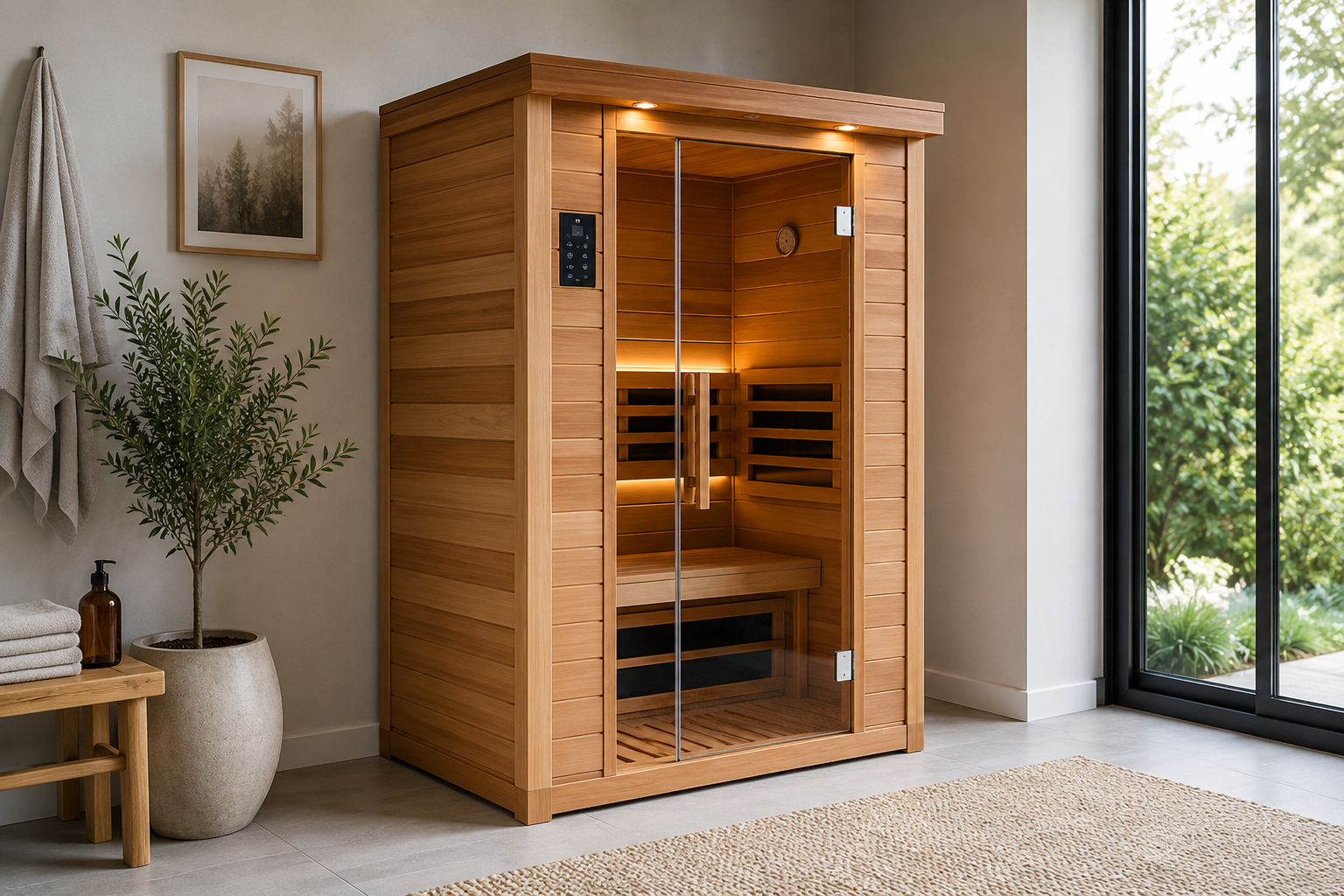
Buying a sauna for home is easier when you begin with the practical details: available space, electrical capacity, preferred heat style, delivery access and the total installed cost. Comparing these essentials first helps you avoid choosing a beautiful sauna that does not suit your room or property.
This 2026 home sauna buying guide explains the nine decisions that matter before you order, including infrared versus traditional heat, capacity, electrical requirements, materials, installation, delivery, warranties and returns. Use it to compare options confidently and choose a sauna that fits your home and the way you plan to use it.
Ready to compare?
Find the right sauna for your space
Compare sizes and features first, then check current options and pricing directly from Peak Saunas.
View Peak Saunas & Current Pricing →
Compare Peak Models →
Affiliate disclosure: Sorene & Stone may earn a commission from qualifying purchases at no additional cost to you.
Quick comparison: which sauna suits your home?
| Sauna type | Best for | Plan for |
|---|---|---|
| Infrared | Simple daily use, smaller indoor spaces, gentler-feeling heat | Heater coverage, electrical requirements, warranty |
| Traditional | Higher heat, adjustable humidity, a classic sauna experience | Ventilation, heater size, dedicated electrical work |
| Outdoor or barrel | Gardens, patios, social wellness spaces | Foundation, drainage, weather protection, permits |
Short on time? Begin with your available space, electrical setup, and preferred heat style. Those three choices will narrow the field quickly.
1. Decide where the sauna will
go
Start with the location rather than the sauna style. Measure the
available width, depth, and ceiling height, then check the route the
packaged sauna must travel through your home. Doorways, stairs, corners,
elevators, and narrow hallways can matter as much as the final
dimensions.
For an indoor sauna, consider:
- A level, durable floor
- Access to the required electrical connection
- Ventilation and clearance around the unit
- Proximity to a shower or changing area
- Whether the room can comfortably handle heat and humidity
For an outdoor sauna, consider:
- A stable, level base
- Drainage and exposure to rain, snow, wind, or intense sun
- A safe path from the house
- Electrical access
- Local permitting, zoning, or homeowners association
requirements
Planning an outdoor infrared sauna? Read our outdoor sauna buying guide for the Peak Patagonia for a closer look at placement, power, delivery and upkeep.
Always follow the manufacturer’s placement and clearance
instructions. If the installation involves dedicated wiring or
uncertainty about local requirements, consult a qualified electrician or
contractor before ordering.
2. Compare infrared and
traditional heat
The two main indoor categories provide different experiences.
Infrared saunas
Infrared saunas use radiant heaters and generally operate at lower
air temperatures than traditional saunas. They are often sold as
easy-to-assemble indoor cabins and may be appealing when you want a
gentler-feeling session, a compact footprint, and straightforward
everyday use.
Look for:
- Heater placement and coverage
- Low-EMF or tested electrical specifications, if that matters to
you - Interior dimensions, not only advertised capacity
- Control placement and timer settings
- Warranty coverage for heaters and electronics
Traditional saunas
Traditional saunas heat the air using an electric or wood-burning
heater. Many allow water to be added to heated stones, creating the
familiar combination of higher temperatures and adjustable humidity.
Look for:
- Heater size relative to the sauna volume
- Electrical or chimney requirements
- Ventilation specifications
- Stone capacity and included accessories
- Interior wood quality and bench layout
The best choice is less about which technology is universally better
and more about the experience you prefer, the installation your property
can support, and how frequently you expect to use it.
Featured infrared option
A streamlined place to begin
Peak Saunas combines full-spectrum infrared heating, built-in red light therapy, smart controls, and a contemporary home-friendly design. Compare the available sizes and specifications against your room measurements before ordering.
3. Be realistic about capacity
Manufacturers commonly label saunas by the maximum number of
occupants, but a “two-person” cabin may feel best for one person who
wants extra space. Check the interior measurements and bench width
rather than relying only on the capacity label.
As a general planning approach:
- One-person sauna: best for tight spaces and
individual routines - Two-person sauna: compact but more comfortable for
one or two users - Three- to four-person sauna: useful for couples or
families who want more room - Larger outdoor sauna: suited to social use and
dedicated wellness spaces
If possible, compare the bench dimensions with a chair or taped
outline at home. This simple step gives a much clearer sense of
comfort.
Considering a two- or three-person infrared sauna?
Read our Peak Fuji two-person review →
Read our Peak Matterhorn three-person review →
4. Check the
electrical requirements before ordering
Some compact infrared models use a standard household outlet, while
larger infrared and traditional electric saunas may require a dedicated
higher-voltage circuit. Outdoor units can involve additional wiring and
weather-protection requirements.
Before buying, confirm:
- Voltage and amperage
- Whether a dedicated circuit is required
- Plug-in versus hardwired installation
- Cord placement and maximum permitted distance from the outlet
- Whether professional electrical installation is required for the
warranty
Do not assume a sauna will work with the nearest outlet. Confirm the
product specification sheet and have an electrician review it when
necessary.
Need help understanding the power requirements? Read our detailed guide to infrared sauna electrical requirements, including 15A, 20A and 240V setups.
5. Compare materials and
construction
The interior wood affects appearance, aroma, durability, and price.
Cedar is popular for its recognizable scent and resistance to moisture,
while hemlock offers a lighter, more neutral look and aroma. Other
premium woods may appear in higher-priced models.
Compare:
- Solid wood versus veneers or composite components
- Interior and exterior wood species
- Bench thickness and support
- Door construction and tempered glass
- Hardware quality
- Exterior weather protection for outdoor models
For an outdoor sauna, ask what treatment or maintenance the exterior
requires and whether a roof kit, shingles, or protective cover is
included.
6. Look beyond headline
features
Chromotherapy lights, Bluetooth speakers, app controls, and
touchscreens can be enjoyable, but they should come after the
fundamentals: reliable heating, comfortable seating, suitable
construction, clear installation requirements, and a strong
warranty.
Features worth comparing include:
- Heat-up time
- Temperature range
- Interior and exterior controls
- Lighting
- Backrests or ergonomic bench design
- Replaceable components
- Customer support and replacement-part availability
A simpler sauna from a reputable seller can be a better long-term
purchase than a feature-heavy model with weak support.
7. Calculate the complete cost
The listed price is only one part of the investment. Build a
realistic total that includes:
- Product price
- Freight or delivery fees
- Foundation or flooring preparation
- Electrical work
- Assembly or professional installation
- Outdoor weather protection
- Accessories
- Ongoing energy use and maintenance
Also review the return policy before ordering. Large saunas can be
expensive to return, and some sellers charge restocking or
return-freight fees.
8. Review delivery, assembly and return logistics
Large saunas can be expensive and difficult to move or return. Before ordering, confirm the delivery method, packaged dimensions and weight, assembly responsibility, damage-inspection window, restocking fees and who pays return freight.
9. Confirm warranty and replacement-part support
Compare warranty terms for the structure, heaters and electronics, and check whether replacement controls, heaters and other components are readily available. Responsive pre- and post-purchase support can matter more over time than extra convenience features.
Questions to ask before you
buy
Use this checklist when comparing models:
- Does the sauna fit the space and the delivery route?
- Can my electrical system support it?
- Is professional installation required?
- What are the true interior and bench dimensions?
- What is included in the purchase price?
- What maintenance does the wood require?
- What does the warranty cover—and for how long?
- Who pays return freight if the sauna is unsuitable or damaged?
- Are replacement heaters, controls, and other parts available?
- Does the seller provide responsive pre- and post-purchase
support?
Our approach at Sorene &
Stone
Sorene & Stone looks for home-wellness products that balance
function, quality, design, and everyday usability. Our goal is to make
comparison easier, explain the details that matter, and help you create
a wellness space that feels considered rather than complicated.
Next step: Explore
our home sauna guides and recommendations.
Featured partner
Peak Saunas
If you are comparing infrared options, Peak Saunas offers full-spectrum infrared heating, built-in red light therapy, smart controls, and contemporary designs intended for home use.
Affiliate disclosure: Sorene & Stone may earn a commission if you purchase through this link, at no additional cost to you.
Comparing cedar and hemlock? Read our complete cedar vs. hemlock sauna comparison for differences in scent, moisture resistance, maintenance and value.
Planning a home-wellness gift? Our considered holiday gift guide connects the sauna decision to specific routines and compares it with a cold-plunge option.
Leave a Reply